Floral Paw Print Vector Art: A Designer’s Review
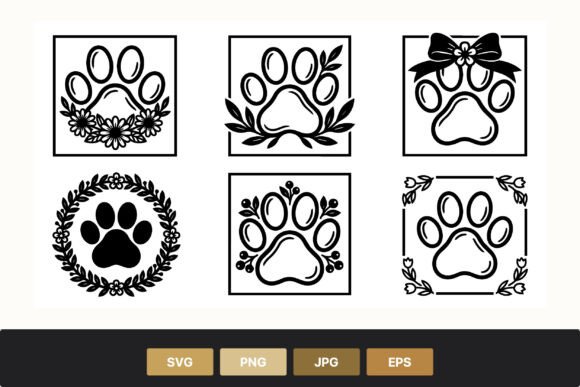
As a designer who spends more time than I care to admit staring at stitch charts and testing fabric swatches, I approach every new embroidery file with a mix of optimism and skepticism. The market is flooded with generic clip art that looks beautiful on a screen but falls apart under the needle. That is why I take a closer look at assets like Floral Paw Print Vector Art. This collection of six black and white vector squares featuring paw prints decorated with flowers, leaves, berries, and a bow offers a specific aesthetic that demands careful evaluation before it ever touches a hoop.
The First Impression: Mood and Visual Personality
When you first load this set into your digitizing software or design program, the immediate takeaway is its strong graphic quality. Because these are provided as vector art, they scale without losing integrity, which is crucial for preparing a clean machine embroidery design. The black and white palette creates a high-contrast foundation that suggests a classic, timeless vibe rather than a trendy, fleeting style. This makes the design assets versatile enough for various branding needs, from a rustic farmhouse boutique to a modern minimalist nursery shop.
The arrangement of elements—paw prints framed by floral motifs—evokes a sense of warmth and domesticity. It feels personal. For an Etsy seller or small business owner, this emotional connection is key. The inclusion of berries and bows adds a touch of whimsy without becoming childish. It strikes a balance that appeals to pet lovers who appreciate elegance. However, the monochromatic nature means the visual impact will rely entirely on how you translate those vectors into thread colors. If you plan to use this as an applique design, the clean lines will make cutting out shapes much easier, ensuring crisp edges in your final finished product.
Real-World Application: From Screen to Stitch
I recently considered using one of these floral paw prints for a custom order—a personalized gift for a client who runs a small animal rescue. The project involved embroidering the design onto a heavy canvas tote bag. Here is how I analyzed the potential performance of Floral Paw Print Vector Art in that scenario.
First, the layout. The square format works beautifully for centering on a tote bag or a pillow cover. It provides a stable anchor point. However, when thinking about custom apparel like sweatshirts or t-shirts, I had to consider placement. A single large square might dominate a chest area, whereas placing smaller variations along a sleeve or pocket could create a subtle, curated look. For baby embroidery, such as on a onesie or burp cloth, the soft floral themes pair well with the innocence of the subject matter. The design feels appropriate for holiday embroidery projects too, especially if you incorporate seasonal thread colors like deep reds or forest greens to complement the berry accents.
In terms of stitching clarity, the vector nature ensures that the underlying shapes are precise. But raw vectors do not equal finished embroidery. The transition from the outline of the paw to the delicate petals of the flowers requires thoughtful digitization. If you are converting this into a digital embroidery file, you must decide between using a dense fill stitch for the solid areas or opting for a lighter satin stitch border with running stitch details inside. The latter would preserve the airy feel of the floral frame, while the former would create a bolder, more durable patch suitable for frequent washing.
Where Caution Is Required
No design is universally perfect, and Floral Paw Print Vector Art has specific constraints that designers need to respect. My primary concern lies with small hoop sizes. While the overall composition is compact, the intricate details within the floral frames—such as individual leaves or small berries—can become muddy if stitched at a very small scale. On a tiny embroidered patch or a cap front panel, these details may merge into a dark blob unless you use high-quality thread and a sharp needle.
Fabric choice is equally critical. Textured fabrics, such as chunky knits or heavily woven linen, can distort the fine lines of the vector art. The stability of the base material affects how cleanly the stitch density sits. If you attempt this on stretchy fabric without proper stabilization, the hoop size constraint becomes even more problematic, leading to puckering. Additionally, working on dark fabric requires a different strategy. You cannot simply trace over black; you will need to use a light underlay or a contrasting thread color to ensure the design pops. This is particularly relevant for commercial embroidery items where brand consistency is paramount.
Another area requiring careful consideration is curved surfaces like caps or sleeves. Flat vector art does not automatically account for curvature. If you are applying this to a hat, you must adjust the design dimensions to prevent distortion. Ignoring this step can ruin the symmetry of the paw print, making it look stretched or squashed, which immediately lowers the perceived value of the handmade product.
Impact on Brand Value and Customer Trust
For craft business owners, the presentation of your product often matters as much as the product itself. Using a clean, professional vector source like this allows for stunning printable mockups. You can showcase the design on various backgrounds, demonstrating versatility to potential buyers. When customers see a high-quality representation of how the embroidery project will look, their trust in your craftsmanship increases.
The theme of pets and nature is evergreen. It has broad appeal, meaning your inventory turnover can be faster if marketed correctly. However, because the design is monochromatic in its source form, your creativity in thread selection becomes part of your unique selling proposition. By choosing sophisticated thread palettes, you elevate a simple paw print into a luxury item. This attention to detail signals professionalism and helps justify premium pricing for your small shop product listings.
Practical Designer Notes for Implementation
Before committing to a full production run or a custom order, follow these steps to ensure success:
- Test on scrap fabric: Always stitch a sample on the exact fabric you plan to sell or use. This reveals issues with tension, thread breakage, or fabric pull that you cannot see on screen.
- Check thread color contrast: Since the original is black and white, experiment with multiple thread combinations. Test both light-on-dark and dark-on-light scenarios to find the most legible option.
- Review stitch density: Ensure the digitized version is not too dense for the chosen fabric. Excessive stitches can cause stiffness and discomfort, especially in personalized gifts meant for daily wear.
- Confirm hoop size: Verify that the final design fits comfortably within your machine’s maximum hoop dimensions, leaving room for necessary stabilizer.
- Inspect small details: Zoom in on the digital preview. Are the berries distinct? Are the leaf veins clear? If details are lost, simplify the design before digitizing.
- Use proper stabilizer: Match your stabilizer weight to your fabric weight. A lightweight tear-away might suffice for cotton tees, but a cut-away is better for stretchy or heavy materials.
- Verify licensing: Check the terms of use carefully. Confirm whether you can sell finished physical items made from this graphics package and whether there are restrictions on creating digital products for resale.
In conclusion, Floral Paw Print Vector Art is a strong candidate for designers looking to add a touch of elegance to their pet-themed collections. Its clean structure and thematic warmth make it suitable for a wide range of applications, from tote bag designs to nursery decor. With careful attention to digitization techniques, fabric selection, and thread choices, this asset can help you create memorable, high-quality embroidered pieces that resonate with customers. Just remember that good design starts with smart preparation, and taking the time to test and refine will pay off in customer satisfaction and repeat business.